

Race. Acting. Immigration. The Asian-American experience? On the surface, they may seem like separate worlds. But put them together and you get a real treat of a book, in a unique format that’s just as engaging as the contents themselves. In fact, for the first time in Sahab Journal history, I’m giving this piece a 6 out of 7 Sahabs, and I’m going to tell you why…
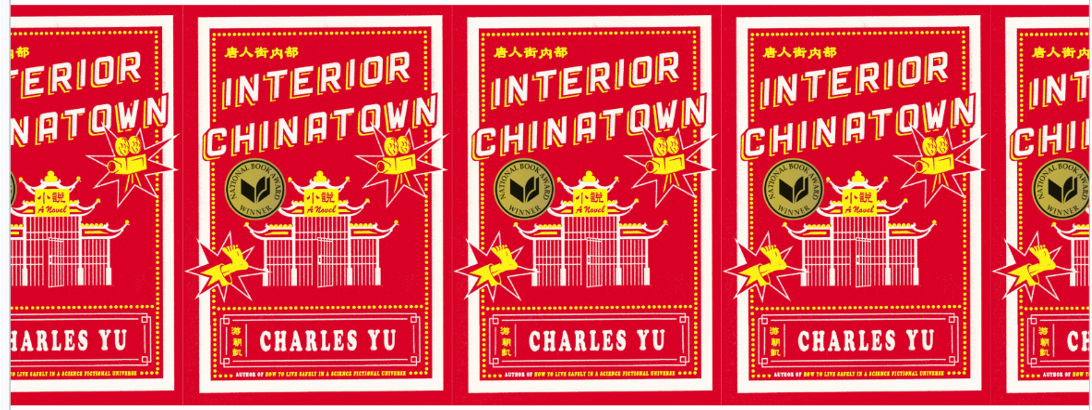
SYNOPSIS (SPOILER WARNING)
Willis Wu has dreamed of being ‘Kung Fu Guy’ since he was a kid, but for now he has to settle with being ‘Generic Asian Man’ - the starting point for every other person who looks like him. His father (‘Sifu the Mysterious Kung Fu Master’) and mother (‘Asian Seductress’) have aged out of their better-known roles and are just barely getting by. While reflecting on his strained relationship with Sifu and the family’s descent into poverty, Willis remembers the story of ‘Older Brother’ - Sifu’s star pupil who became “the mythical Asian American man, the ideal mix of assimilated and authentic”. Ideally, he should have been the one to help Sifu out the most, but his star had faded as quickly as it came; besides, he had never been wholly comfortable with his place in the hierarchy. But Willis soon finds himself centre-stage in a courtroom scene…with Older Brother as his defence lawyer! Once the scene is over, Willis reflects on whether being known by his roles alone is all there is to life.
“Take what you can get. Try to build a life. A life at the margin made from bit parts.”
What is effective in the author’s telling?
Charles Yu makes effective use of the script format to relay Willis’s story. His inner thoughts are reminiscent of stage directions/character descriptions, while the third-person narration speaks directly to the reader as though they are a ‘Generic Asian Man’. This serves to drive home the broader point that is made about the ubiquity of Willis’s situation (“All of us collapse into one, Generic Asian Man”). The use of a court trial halfway through the story (“ACT VI: THE CASE OF THE MISSING ASIAN”) places Willis within a wider context of laws which excluded Chinese immigrants, many of which are listed at the start of the chapter. At first, it seems like Willis is on trial for his own ‘disappearance’, but Older Brother clarifies to everyone that Willis is “Both victim and suspect…Guilty of wanting to be part of something that never wanted him”. Willis then admits he is guilty of internalising his role and letting it define him. The trial could therefore be interpreted as Willis’s reckoning with the system, and with himself.
“Chinatown and indeed being Chinese is and always has been… a construction, a performance of features”
Where did you need more from the author to be engaged?
Adding more background on Willis’s father and mother would have helped draw more explicit parallels with Willis’s story. I also found it unclear whether the courtroom and Golden Palace scenes towards the end are actual scenes from the show Willis is a part of, or a dream sequence. We also don’t know much about Karen (Willis’s ex-wife) and Phoebe (daughter), so their prominent inclusion towards the end can come across as a little rushed to some readers.
“You always tried so hard at everything, Willis…Maybe I was wrong, telling you to be more”
What did the piece make you consider in an associative manner?
The story repeats a quote from the start of the story at the end of the story, in order to affirm the idea that Willis has come full circle (“Take what you can get. Try to build a life. A life at the margin made from bit parts”). In a similar vein, Willis’s desire to be in the literal spotlight is set up at the start (“Someday you want the light to hit your face like that. To look like the hero. Or for a moment to actually be the hero”) and paid off during the courtroom scene when he gets a chance to monologue (“The light, it’s on you, and it’s hitting you just right”). Beyond Willis, I also noticed Older Brother’s journey from ‘Kung Fu Guy’ to lawyer as a way of finding his own path beyond the pre-ordained hierarchy in Chinatown (“Older Brother to the rescue, after all, fulfilling his destiny with his mouth and his brain instead of his hands and feet”). This effectively mirrors Willis’s own journey of getting out of the ‘Generic Asian Man’ role, and the realisation that what he wanted to be was just another subordinate role.
“Kung Fu Guy is just another form of Generic Asian Man”
What were your overall thoughts?
A uniquely engaging piece that blends personal reflection, racial commentary, and a screenwriting format into one. Willis’s journey as a struggling actor is well told and will be relatable to many people, whether they are Asian-American or not. The use of script-style titles in place of chapter headings (“OLDER BROTHER AWESOMENESS MONTAGE”) felt very creative and fitted the tone of the story well. Above all, the script-style presentation created a sense that Willis’s whole identity is consumed by a need to perform - even when he becomes a father (“I spent most of my life trapped…I made it out, to become Kung Fu Dad. But that was just another role).
Overall rating: 6 out of 7 Sahabs
To read about the Sahab 7even rating system, please visit this post.
