

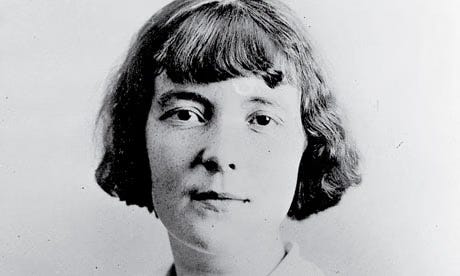
If you always wanted to see age, loneliness, and illusion-making intersect in one narrative, then Catherine Mansfield has got the short story for you. Let’s go…
Synopsis (SPOILER WARNING)
An elderly English teacher named Miss Brill spends her Sunday afternoons at the Jardins Publiques (Public Gardens), observing everything she sees - the colour of the sky, the bandsmen, and the people sitting near her. Eagerly wearing her ermine toque fur, Miss Brill finds everything in the park so exciting that she thinks of herself as part of a play, turning up every Sunday for her ‘performance’. She anticipates that as the band plays an uplifting tune, all the ‘actors’ in the park will start singing - a thought that makes her cry. A young couple - the ‘hero’ and ‘heroine’ of the play - sit next to her, but a rude comment from the young boy shatters Miss Brill’s illusion. On Sundays she would normally stop by the bakery for a honey-cake slice, but this time she sits in her small dark room and puts the fur back in its box.
“How she loved sitting here, watching it all! It was like a play….Who could believe the sky at the back wasn’t painted?”
What is effective in the author’s telling?
Miss Brill’s detailed and idiosyncratic observations of the atmosphere and people at the park (“Wasn’t the conductor wearing a new coat, too? She was sure it was new”) serves to highlight her attentiveness in a place that she visits all too often. I also found effective the author’s use of third person narration, as I felt that this created a distance between Miss Brill and the reader - a potential metaphor for Miss Brill’s distance from reality.
“...what they played was warm, sunny, yet there was just a faint chill – a something what was it? – not sadness – no, not sadness – a something that made you want to sing”
Where did you need more from the author to be engaged?
I would have liked to have seen more of Miss Brill’s backstory in order to find out why she would be driven to her ‘play’ at the park every Sunday. As such, we’re not given much insight into the trigger that caused Miss Brill to inhabit an illusory world.
“Yes, we understand, we understand, she thought – though what they understood she didn’t know”
What did the piece make you consider in an associative manner?
I noticed parallels between the ermine toque and Miss Brill; the fur was bought when she was much younger, but over time they start to resemble each other (“now everything, her hair, her face, even her eyes, was the same colour as the shabby ermine, and her hand…was a tiny yellowish paw”). Both are also taken out of, and returned to, their respective ‘boxes’ - in Miss Brill’s case, her small room. The fur is a character of its own in Miss Brill’s world, described as being a “little rogue” with thoughts of its own (“‘What has been happening to me?’ said the sad little eyes”). Maybe wearing the fur is a way for Miss Brill to feel young again.
I also spotted a connection between Miss Brill’s inner state and the park band (“But even the band seemed to know what she was feeling and played more softly, played tenderly”). This reflects the centrality of the band in lifting the mood of the park environment and encouraging all the ‘actors’ to sing.
“Now everything, her hair, her face, even her eyes, was the same colour as the shabby ermine”
What were your overall thoughts?
A melancholic piece that blends themes of age and isolation, it took me a second reading before I fully understood the themes and connections in Miss Brill’s story. The blending of illusion and reality did catch me off-balance, and the overly descriptive tone (“...the blue sky powdered with gold and great spots of light like white wine splashed over the Jardins Publiques”) was a little tough to get through. But Miss Brill’s observant attention to detail and excitement at seeing the ‘play’ serves to highlight her self-involved isolation, projecting an illusory image of the outside world that makes her feel as though she belongs (“No doubt somebody would have noticed if she hadn’t been there; she was part of the performance after all”). The young boy’s comment (“‘Why doesn’t she keep her silly old mug at home?’”) brings an abrupt end to the park fantasy. This leads to her passing by the bakery and parting ways with her fur - and perhaps, a part of herself (“when she put the lid on she thought she heard something crying”). This emotional core is what kept me interested, and curious as to how she ended up the way she is.
Overall rating: 4 out of 7 Sahabs
To read about the Sahab 7even rating system, please visit this post.
