

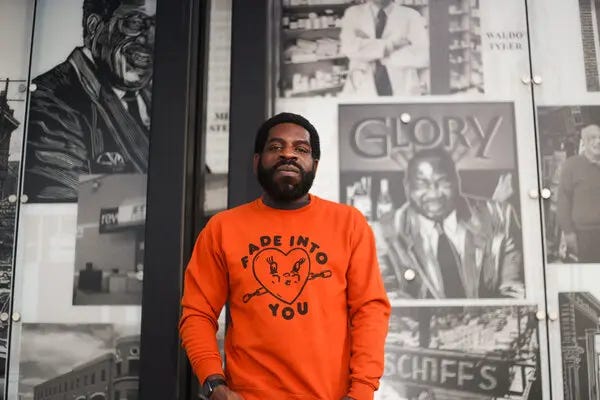
The Sahab Journal proudly represents a milestone in representation - our first male author up for review !
SYNOPSIS (SPOILER WARNING!)
Abdurraqib relates his experience of wanting to get into rock n’ roll - a path that leads him to the Rolling Stones. But a preference for bandmate Mick Taylor propels the “older dudes” at the record store to introduce him to Let It Bleed (1969). For Abdurraqib, the opening track ‘Gimme Shelter’ is the best the album has to offer. In the song, Mick Jagger clashes for space with backup singer Merry Clayton. But despite her outsized role, the narrator struggles to find her name mentioned anywhere else beyond liner notes. Abdurraqib relates to us the context behind the album, its opening track, and Clayton herself. By 1969 she had enjoyed moderate success, but was not considered solo artist material. However, the Stones needed a powerful voice for ‘Gimme Shelter’. So Clayton accepted a midnight call to get to the studio. Abdurraqib links the song and its themes to the fate of Meredith Hunter, an 18-year old who was killed while the Stones played at the Altamont Free Concert. The piece concludes with a long paragraph of appreciation for Clayton and background singers everywhere.
“I like my albums to start by asking me what I think I can stand”
What is effective in the author’s telling?
Abdurraqib writes in a relatable manner, detailing his introduction to the Rolling Stones and his goal of giving Clayton her ‘roses’ before it’s too late. The narrator’s detailed thoughts on ‘Gimme Shelter’ and its composition (“...one of those songs that churns and churns, invites you in and then shakes you up”) serves to reinforce the song’s unique appeal. The story behind the song and Clayton’s career blends elements of music criticism and biography, but the little details about her, e.g. recording in silk pajamas and a fur coat “because she refused to show up to the studio not looking at least a little bit fly”, make her feel like a real person instead of a distant historical figure.
“All of us are just hanging on the edge of someone else’s lust for power”
Where did you need more from the author to be engaged?
Initially I was expecting a full review of Let it Bleed, but unfortunately it feels like Abdurraqib dismisses the rest of the album in favour of talking about ‘Gimme Shelter’ at length. While I understand that the author sees it as the standout track on the album, I would have liked to have heard his opinion on the other songs in the album, as a way of balancing the scales and fostering a deeper appreciation of the Rolling Stones beyond one song.
“Even the greatest singer who is relegated to the background has a hard time expanding out of it”
What did the piece make you consider in an associative manner?
Abdurraqib makes a poignant connection between ‘Gimme Shelter’ and Meredith Hunter’s death - both are about how the smallest things can drive people to violence (“There is no reprieve from the machinery of violence, and everyone is a tripwire away from setting off the wrong type of explosion”). An underdog status is shared by Hunter and Clayton, as both remain obscure in relation to Rolling Stones history. Abdurraqib draws a direct correlation by referring to background singers as being “buried in history, in a grave with no marker for your name” - a reference to Hunter being buried in an unmarked grave. Hence why Abdurraqib wants “the small red fists to come from the earth and slowly open wherever Meredith Hunter’s body is”. For Clayton, the author demands recognition for her and for other underrated artists (“I would like to give roses to every singer who had a name tied up in liner notes and not on the tongues of people who sang along to their pristine vocals”).
“I want shelter, and I don’t even know what that means anymore. I want nowhere, nothing sacred”
What were your overall thoughts?
This was an effective piece that weaves together appreciation for Rolling Stones music with a deeper goal of making obscure individuals more well-known. Abdurraqib provides good context for where the Stones and Clayton were at in their respective careers and how ‘Gimme Shelter’ came to be. What made it engaging was that it never read like an official biography or music review; the inclusion of Meredith Hunter acts as a mirror for the song’s themes as well as being another example of someone who was obscured by larger events beyond their control.
Overall rating: 5 out of 7 Sahabs
To read about the Sahab 7even rating system, please visit this post.
